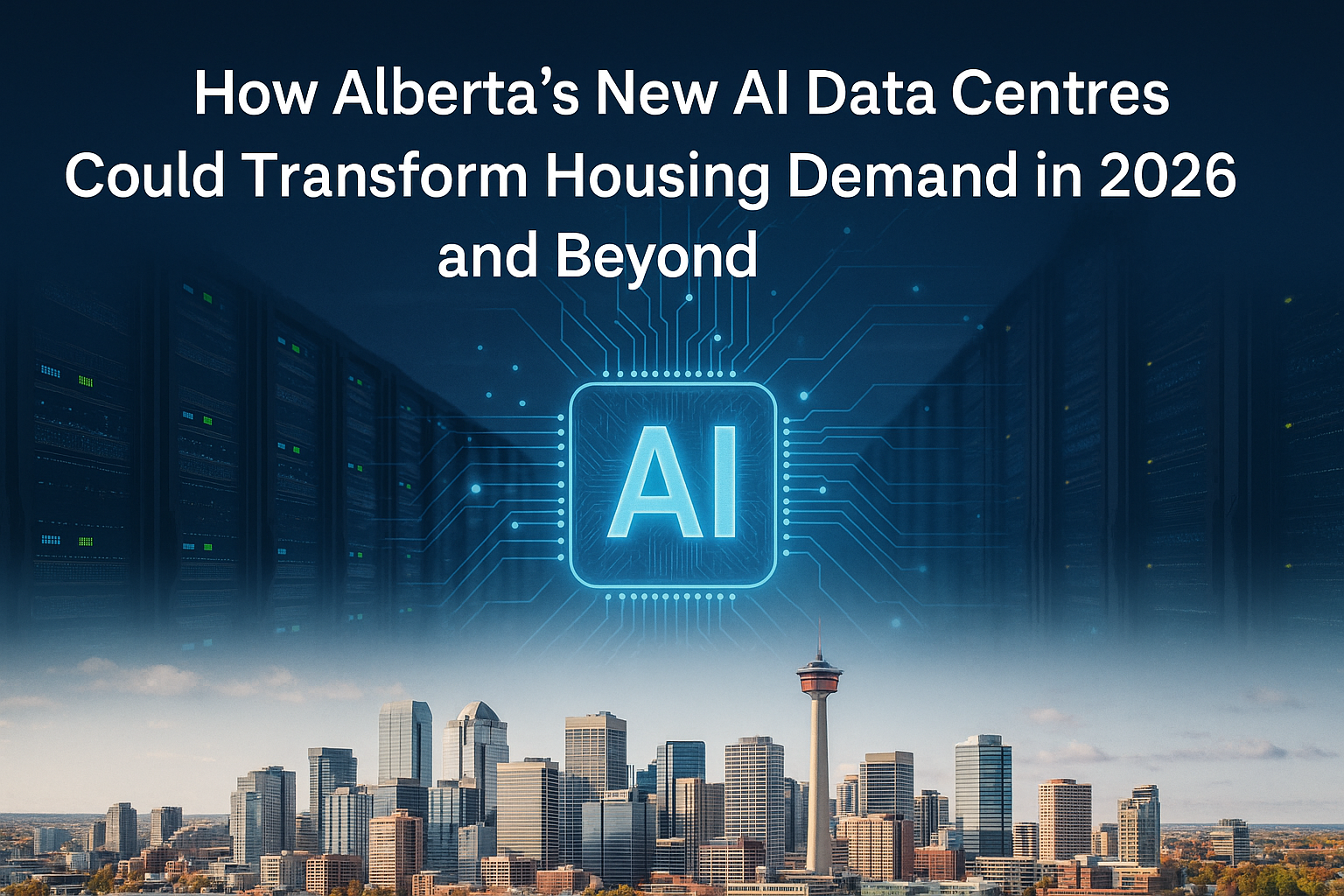
How Alberta’s New AI Data Centres Could Transform Housing Demand in 2026 and Beyond
Alberta has been known for decades as a powerhouse in energy, agriculture, and logistics — but a new industry is quietly building momentum and could reshape the province’s economic future: AI infrastructure.
Across Alberta, multiple large-scale AI data centre campuses are being planned or proposed, including a confirmed site near High River and several more around the Calgary–Edmonton corridor. Combined, these projects represent billions in investment and the potential for thousands of new jobs.
For real estate investors, this matters.
Rapid growth in tech and AI infrastructure doesn’t just change industries — it
changes population flows, rental demand, and long-term economic stability.
Here’s what’s happening and what it means for Alberta’s housing market.
1. Alberta Is Positioning Itself as a Global AI Infrastructure Hub
In late 2025, Alberta announced a new strategy to attract
$100 billion+ in AI-related data-centre investment over the next decade.
(Source: ML TAIKINS)
This initiative focuses on:
- large-scale AI compute centres
- clean-power-ready industrial sites
- talent development
- partnerships with global AI firms
- high-performance cloud and data infrastructure
This isn’t just a policy document — major companies have already begun moving.
2. Beacon AI Centers: Multiple Data Centres Planned, Including Near High River
Calgary-based
Beacon AI Centers is developing a multi-site pipeline of AI data centre campuses across Alberta, targeting up to
4–5 gigawatts of future capacity.
(Source: DataCenterDynamics)
One of the confirmed locations is near High River (Foothills County).
Other potential sites include:
- Chestermere
- Langdon
- Beaumont
- Acheson
- Sturgeon County
These facilities are designed for high-density AI compute and cloud infrastructure, with first-phase targets around 2027.
Why this matters:
Data centres create strong, long-term regional employment — not just tech roles, but construction, electrical, mechanical, maintenance, logistics, and operations.
3. Wonder Valley AI Park Near Grande Prairie: A Potential Global Landmark
Investors have also announced one of the largest AI-industrial parks in North America:
The Wonder Valley AI Data Centre Park near Grande Prairie.
(Source: Alberta Major Projects)
If fully realized, this project could become:
- one of the largest AI campuses in the world
- a multi-billion-dollar tech ecosystem
- a major employer for Northern Alberta
This region already benefits from strong workforce movement in energy and trades. Adding AI and compute infrastructure compounds demand for long-term rentals.
4. What AI Data Centres Actually Mean for Jobs
Unlike traditional tech offices, AI data centres create a mix of job types:
Construction phase (2–5+ years):
- electricians
- pipefitters
- heavy equipment operators
- framers
- concrete specialists
- project managers
- civil engineers
This phase alone can generate hundreds to thousands of jobs per site.
Operational phase:
- technicians
- mechanical engineers
- network engineers
- data-infrastructure specialists
- facilities managers
- security
- cleaning and property services
These roles tend to be:
- long-term
- well-paid
- stable
- concentrated around the site
This is the exact tenant profile investors love.
5. How This Affects Housing Demand in Alberta
AI infrastructure projects create ripple effects across communities. Here’s how they drive rental demand:
1. Worker Relocation
People moving for construction or operations need housing — often furnished or medium-term rentals.
2. Population Growth
Tech industries tend to attract additional support industries, which increases total regional demand.
3. Wage Growth
Higher-paying tech and engineering roles increase local spending power and support higher rent ceilings.
4. Reduced Vacancy in Mid-Sized Cities
Places like Grande Prairie could see pressure on an already constrained rental market.
5. Long-Term Stability
Data centres don’t pack up and leave. They operate for decades.
This gives investors durable, predictable tenant demand, even through economic cycles.
6. Where Investors Should Pay Attention
These areas are positioned to benefit most:
▶ High River / Foothills County
Beacon’s confirmed site will attract skilled trades and operations workers, supporting medium-term rentals.
▶ Grande Prairie
The Wonder Valley AI Park could transform the region’s economic landscape — and housing demand.
▶ Acheson, Sturgeon, Chestermere, Langdon, Beaumont
These fast-growing communities between Calgary and Edmonton may host multiple Beacon AI sites.
Each of these markets already sees strong migration and improving rent fundamentals. AI infrastructure simply accelerates those trends.
7. What This Means for Fresh Coast Investors
At Fresh Coast Investments, we look for markets where:
- demand is growing
- supply is constrained
- industries are expanding, not contracting
- rental stability will last 10+ years
AI data centres check all those boxes.
They bring:
- new workforce segments
- sustained construction demand
- long-term operational employment
- indirect economic growth
- pressure on rental housing
For investors, that means stronger occupancy, higher rent resilience, and more predictable cash flow.
Final Takeaway: Alberta’s AI Boom Is a Real Estate Opportunity Hiding in Plain Sight
Most people see data centres as a tech story.
Smart investors see them as a housing demand story.
With multi-billion-dollar projects underway — including confirmed sites near High River and massive plans in Grande Prairie — Alberta is entering a new era of economic diversification that supports long-term rental growth.
And investors who position themselves early will benefit the most.

Aaron Bellmore
Fresh Coast Investments