
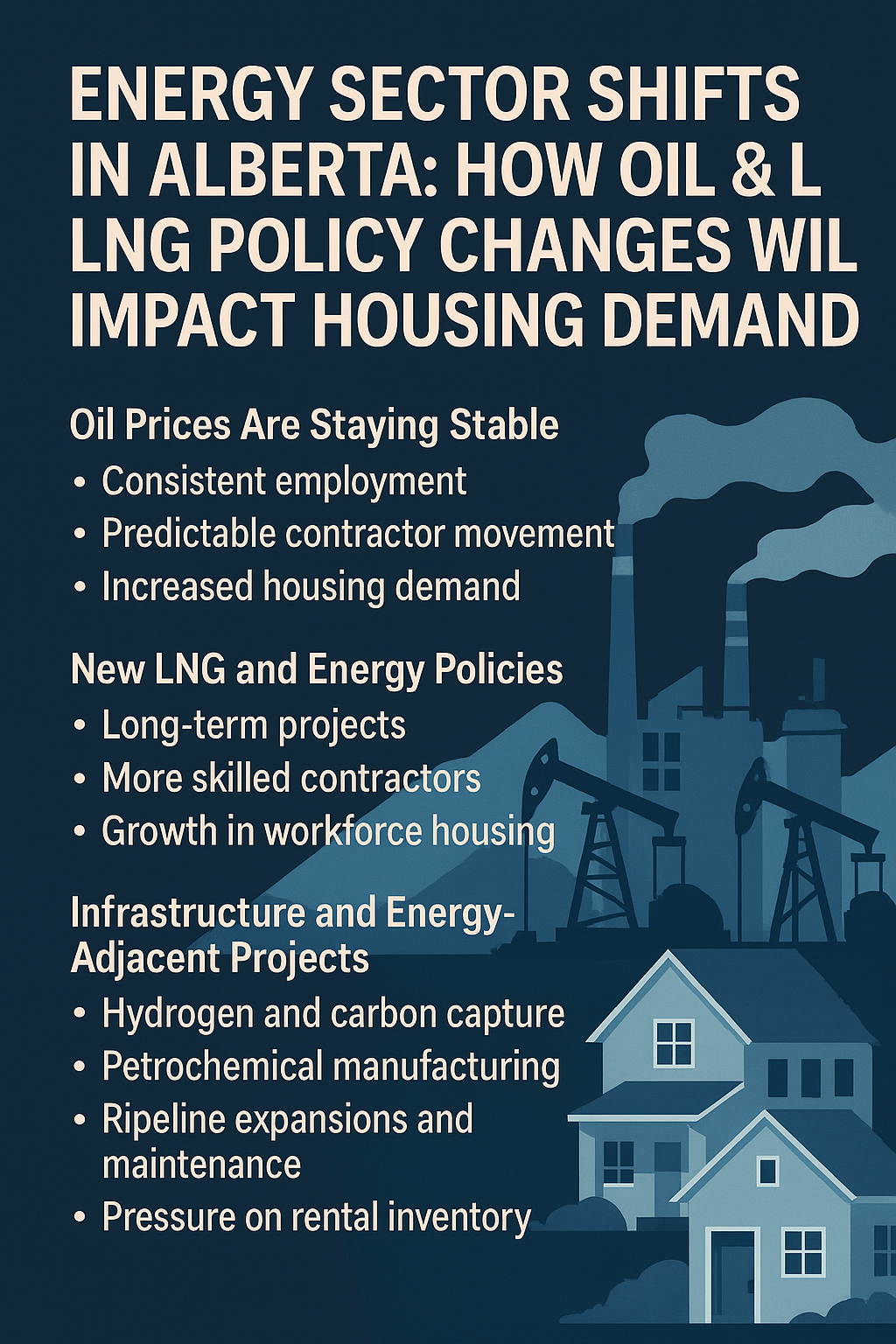
Energy Sector Shifts in Alberta: How Oil & LNG Policy Changes Will Impact Housing Demand
Alberta’s real estate market is closely tied to the strength and stability of the province’s energy sector. And right now, there are important shifts happening in oil, gas, and LNG policy that investors should be paying attention to — not because they signal volatility, but because they point to steady, predictable demand for housing in 2026 and beyond.
Here’s what’s changing, why it matters, and how it affects cash-flow investors looking to buy in Alberta’s strongest markets.
1. Oil Prices Are Staying Stable —
And That’s Good News for Investors
Most forecasts show oil hovering in the
USD $60–$70 per barrel range heading into 2026.
This isn’t a boom — but it isn’t a downturn either.
Stable oil typically leads to:
- consistent employment
- predictable contractor movement
- long, steady project timelines
- increased housing demand in mid-sized regions tied to energy work (like Grande Prairie)
For rental investors, stability is better than spikes. Spikes create short-term chaos and short-term demand. Stability creates long-term tenants.
2. New LNG and Energy Policies Are Reshaping Workforce Movement
Recent regulatory attention on emissions, flaring limits, and LNG approvals has pushed companies to adjust operations — not pause them.
What this means in practice:
- More long-term environmental and operational projects
- Increased demand for skilled contractors
- Steady inflow of technicians, engineers, trades, and project managers
- Growth in medium-term workforce housing demand
These workers don’t come for 2 weeks. They come for 6–18 months.
And they overwhelmingly rent furnished or ready-to-live rentals.
3. Infrastructure and Energy-Adjacent Projects Are Ramping Up
Alberta is also seeing growth in energy-adjacent sectors:
- hydrogen
- carbon capture
- petrochemical manufacturing
- pipeline expansions and maintenance
- upgrading and modernization projects
Each of these creates waves of workforce movement, often into cities like Grande Prairie, Red Deer, Lethbridge, and the Edmonton gateway communities.
More projects → more workers → more demand for rentals.
This is exactly the type of sustained movement that keeps furnished rentals full and long-term rentals stable.
4. Predictable Employment = Predictable Tenants
Unlike tourism-driven or university-driven markets, Alberta’s energy sector produces tenants who are:
- employed full time
- reimbursed for housing
- paid well
- unlikely to break leases
- not seasonal or unpredictable
For investors, this means:
- low vacancy
- fewer payment issues
- stronger long-term cash flow
- more resilience if interest rates rise again
This is one of the reasons Alberta’s rental markets outperform many Canadian markets during national slowdowns.
5. Why Mid-Sized Energy Hubs Benefit Most
The effects of regulatory and project shifts aren’t felt evenly across Alberta.
Major cities like Calgary and Edmonton absorb the impact differently.
But mid-sized hubs — like Grande Prairie — feel it immediately.
Grande Prairie continues to see:
- strong migration from across Canada
- consistent demand from trades and industrial workers
- low vacancy relative to supply
- rising rents compared to Alberta averages
- limited overbuilding (unlike major metros)
When energy activity stabilizes or expands, mid-sized hubs gain population faster than the housing supply can keep up.
This creates sustained pressure on rental inventory — which is exactly what cash-flow investors want.
6. What Investors Should Do Heading Into 2026
Here’s how to position yourself as the energy sector shifts:
1. Focus on markets directly tied to project work.
Grande Prairie, Medicine Hat, Red Deer, and the Edmonton fringe markets benefit most.
2. Prioritize furnished or medium-term rentals.
Energy workers need move-in-ready housing, not unfurnished leases.
3. Underwrite for stability, not speculation.
Use conservative rent numbers and realistic vacancy — the demand will take care of the rest.
4. Leverage shared ownership to diversify.
Instead of buying one property alone, own pieces of several and spread out risk.
Final Takeaway: Alberta’s Energy Shift Favors Long-Term, Cash-Flow Investors
The news headlines sometimes make regulatory changes sound scary. But for Alberta real estate, they’re creating conditions investors dream about:
- Stable oil.
- Large-scale energy-adjacent projects.
- Strong workforce movement.
- High rental demand in mid-sized cities.
- Predictable, reliable tenants.
The result? A more stable foundation for rental cash flow in 2026 than many other provinces can offer.

Aaron Bellmore
Fresh Coast Investments